In the high-stakes environment of Dubai real estate, demolition isn’t a task of brute force; it’s a discipline of structural engineering and regulatory precision. You likely recognize that clearing a residential plot involves far more than just bringing down walls. It’s about protecting the structural integrity of neighboring villas and meeting the rigorous mandates of Law No. (3) of 2026 concerning building safety. Managing these variables requires a methodical partner who prioritizes risk mitigation over speed.
This guide provides a comprehensive roadmap for securing professional villa demolition services Dubai, ensuring your project moves from initial permit approval to a shovel-ready site without legal delays or safety incidents. We’ll examine the latest Dubai Municipality requirements, the critical role of shoring for site stability, and the systematic approach required for zero-fault debris management. By the end of this article, you’ll have the technical clarity needed to transition your property into a clean, leveled foundation ready for new piling and construction.
Key Takeaways
- Understand the critical mandates of Law No. (3) of 2026 and the essential sequence of Dubai Municipality NOCs required for a compliant project.
- Learn how to identify professional villa demolition services Dubai that utilize controlled dismantling to protect your investment and neighboring assets.
- Discover why shoring and piling are indispensable engineering requirements for maintaining soil stability and structural integrity in high-density residential areas.
- Identify the technical advantages of precision concrete cutting and specialized excavation in preparing a site for immediate redevelopment.
- Gain clarity on the logistical requirements for systematic debris removal and site clearance to ensure a clean, leveled plot ready for piling.
The Strategic Importance of Professional Villa Demolition in Dubai
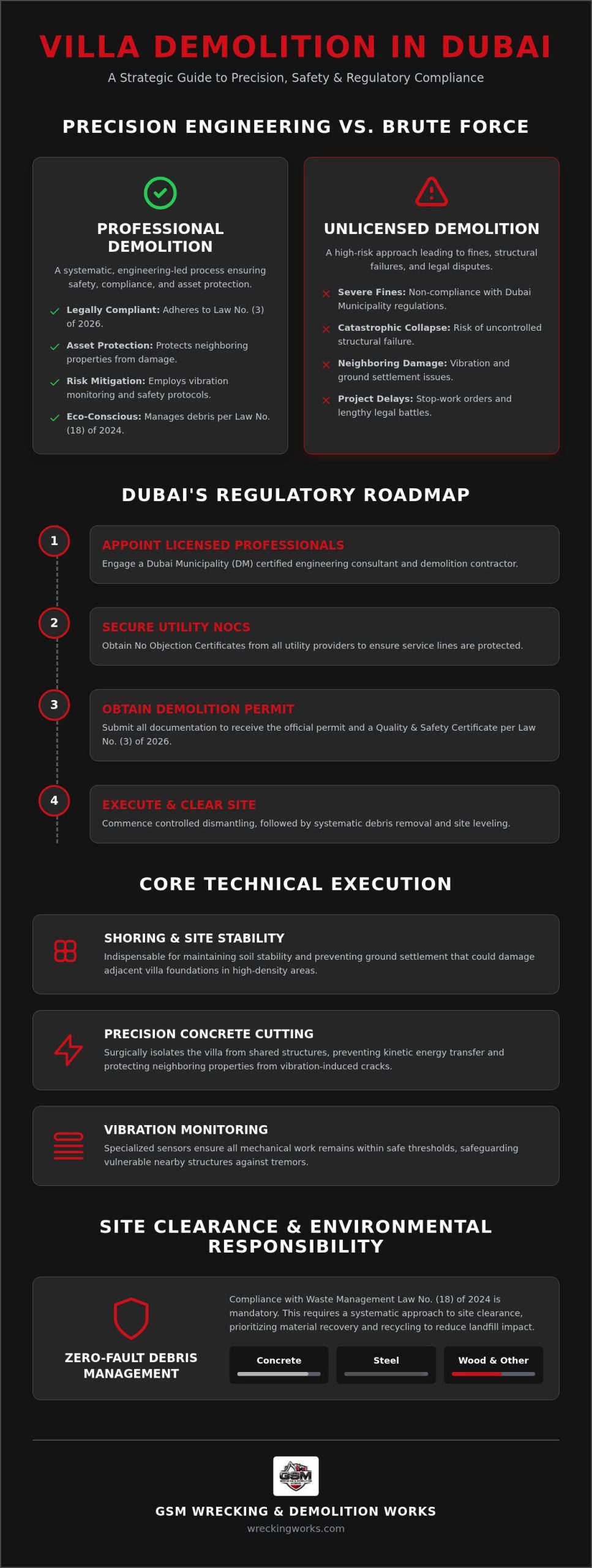
Professional villa demolition in Dubai is a highly controlled engineering process, distinct from the crude wrecking methods often seen in less regulated markets. It involves the systematic dismantling of a structure to ensure the safety of personnel and the protection of adjacent assets. Utilizing unlicensed contractors for villa demolition services Dubai presents severe risks, including substantial fines from the Dubai Municipality, catastrophic structural collapse, and permanent damage to neighboring properties. Since the enforcement of Law No. (3) of 2026, the focus has shifted toward building safety and quality certificates, making professional oversight a legal necessity rather than an option.
Residential projects in Dubai demand higher precision than industrial ones because of the proximity to high-value assets and strict community regulations. A single error in judgment can lead to ground settlement or vibration damage in a neighboring villa, resulting in costly legal disputes and project delays. The 2026 regulatory environment in the UAE emphasizes not just the removal of debris, but the responsible recovery of materials. This shift requires contractors to possess sophisticated logistics capabilities and a deep understanding of the new Waste Management Law No. (18) of 2024. Selecting qualified demolition contractors in Dubai who meet the mandatory registration requirements and Civil Defense safety standards for 2026 is essential to avoiding penalties that can reach AED 2,000,000.
Controlled vs. Conventional Demolition Methods
Choosing the right methodology depends on the proximity of other structures and the client’s final objectives. While mechanical demolition using high-reach excavators is efficient for full-scale removal, residential projects often require selective dismantling to preserve boundary walls or specific architectural features. For a detailed overview of demolition techniques, one can see how mechanical methods have evolved into surgical procedures. Precision concrete cutting and core drilling are frequently employed to isolate the villa from shared structures, preventing the transfer of kinetic energy that could cause cracks in a neighbor’s foundation.
Risk Mitigation and Safety Protocols
Safety in the residential sector requires a higher degree of precision than industrial sites due to the density of Dubai’s neighborhoods. Before any heavy machinery arrives, a methodical risk assessment identifies potential hazards such as underground utility lines or unstable soil conditions.
- Vibration Monitoring: We deploy specialized sensors to ensure that mechanical work stays within safe thresholds, particularly in older districts where structures are more vulnerable to tremors.
- Environmental Controls: Implementing advanced dust suppression and noise barriers is essential for maintaining community compliance and avoiding stop-work orders from authorities.
- Material Recovery: Under the 2026 waste management guidelines, professional villa demolition services Dubai prioritize the segregation of concrete, steel, and wood to facilitate recycling and reduce landfill impact.
This engineering-first approach ensures that the site is not just cleared, but prepared for the next phase of development with zero legal or structural liabilities. By treating demolition as a technical discipline, stakeholders can avoid the hazards associated with unregulated site clearance.
Navigating Dubai’s Regulatory Framework for Demolition Permits
In Dubai, the physical dismantling of a villa is the final stage of a rigorous administrative journey. Before any machinery touches the site, a complex web of legal approvals must be secured to ensure public safety and utility protection. Engaging professional villa demolition services Dubai involves more than just machinery; it requires a deep understanding of the Dubai Municipality (DM) and Dubai Development Authority (DDA) protocols. Site preparation starts with legal documentation, not excavators. Failure to follow the correct sequence of approvals often leads to severe penalties and indefinite project delays. Since the implementation of Law No. (3) of 2026, every project must also secure a Quality and Safety Certificate from a licensed engineering firm before work commences.
The permit process is strictly linear. It begins with the appointment of a licensed engineering consultant and a certified contractor. Following this, No Objection Certificates (NOCs) must be obtained from all utility providers. This systematic execution aligns with global standards, such as those advocated by the Institute of Demolition Engineers (IDE), which emphasizes that pre-demolition planning is critical to structural and environmental safety. Only once these administrative hurdles are cleared can the physical work begin with confidence.
Essential NOCs: DEWA, RTA, and Telecommunications
The first hurdle is utility disconnection. DEWA requires a formal application to cut electricity and water services; this must be verified with a disconnection certificate before any structural work begins. Simultaneously, coordination with Etisalat and du is mandatory to identify and protect underground fiber optic lines that often traverse residential plots. For villas located near major roads or within busy residential zones, the Roads and Transport Authority (RTA) must issue permits for heavy equipment mobilization. This ensures that the arrival of excavators doesn’t disrupt local traffic or damage public infrastructure.
Dubai Municipality and Trakhees Compliance
Once utility NOCs are secured, the contractor submits a detailed Demolition Method Statement to the relevant authority, typically DM or Trakhees. This document outlines the technical approach, safety measures, and debris management plan. For villas in gated communities or specialized zones like those managed by the DDA, additional NOCs from the master developer are required to ensure compliance with community-specific rules. Following the completion of the work, a final site clearance certificate is issued. This document is essential for the legal handover to piling and shoring teams. Managing these administrative layers is a core component of professional villa demolition, ensuring that your transition to new construction remains on schedule and free of legal complications.
Technical Execution: Precision Dismantling and Excavation
Once the administrative framework is established, the physical transition of the property begins through systematic dismantling. Technical execution for villa demolition services Dubai relies on high-reach excavators equipped with specialized attachments like hydraulic shears and concrete pulverizers. These tools allow for the top-down dismantling of reinforced concrete structures, minimizing the risk of uncontrolled collapse. Unlike industrial wrecking, residential demolition in Dubai often occurs in confined spaces. This requires operators to execute movements with centimeter-level accuracy to avoid encroaching on neighboring plots or damaging shared infrastructure.
Systematic debris sorting is integrated directly into the dismantling phase. By segregating materials such as steel reinforcement, timber, and masonry at the source, we ensure compliance with the UAE’s stringent 2026 waste management mandates. This organized approach prevents the site from becoming a cluttered hazard. It also streamlines the transition from above-ground structural removal to sub-surface earthworks. Every phase is documented to ensure the site meets the safety standards required for the final clearance certificate. Adhering to the latest urban demolition safety standards is critical at this stage to ensure that all mechanical operations remain within the regulatory thresholds established for high-density residential zones.
Concrete Cutting and Core Drilling Applications
Precision concrete cutting is essential for villas that share structural elements or boundary walls with adjacent properties. We utilize diamond wire sawing to achieve clean, vibration-free cuts through thick reinforced slabs, effectively isolating the target structure from its surroundings. Core drilling is equally critical during partial demolitions, allowing for the rerouting of utilities without compromising the integrity of the remaining building. These methods provide the surgical accuracy required for major renovations or expansions in established Dubai communities where structural preservation is a priority.
Bulk Excavation and Earthworks
After the superstructure is removed, the focus shifts to sub-surface clearance. This phase involves the extraction of deep foundations, footings, and obsolete underground septic tanks that could obstruct future construction. Bulk excavation is not merely about removal; it’s the first step in site preparation. We conduct comprehensive site leveling and grading to align with the new architectural footprint. Following excavation, soil testing and compaction are performed to ensure the ground meets the load-bearing requirements for new piling works. This methodical preparation guarantees a stable foundation for the next phase of development, transforming a demolished plot into a construction-ready site.
Protecting Adjacency: Shoring and Piling for Site Stability
In high-density residential sectors like Palm Jumeirah or Jumeirah, the proximity of neighboring structures transforms a standard demolition into a complex structural risk management project. When you engage villa demolition services Dubai, the primary technical concern is preventing lateral soil displacement and foundation settlement in adjacent properties. The removal of a villa’s foundation can alter the equilibrium of the surrounding earth, potentially causing structural cracks or subsidence in neighboring homes. Engineering precision is mandatory to maintain the stability of the entire block during and after the dismantling phase.
GSM Wrecking & Demolition Works utilizes an integrated approach where shoring is positioned as an essential safety protocol rather than an afterthought. By coordinating the demolition phase with immediate site stabilization, we eliminate the window of vulnerability that occurs when a site is left unsupported. This synergy between dismantling and foundation support ensures that the transition to new construction is seamless and structurally sound. Our methodology focuses on a “safe pair of hands” philosophy, prioritizing the protection of third-party assets through rigorous monitoring and proven engineering standards.
Shoring Solutions for Deep Basements
For villa projects involving deep basement excavations, robust shoring systems are non-negotiable. We implement H-beam or secant piling to create a rigid perimeter that supports the weight of the surrounding soil and the public right-of-way. These systems are critical for protecting underground utility lines and ensuring that heavy equipment can operate near the site edge without causing a cave-in. In areas with shared boundary walls, structural shoring provides the necessary lateral support to keep the neighbor’s property secure while your old structure is removed. This methodical execution prevents the costly legal and repair issues associated with ground movement.
Piling Works for the New Structure
The success of new piling works depends entirely on the quality of the preceding demolition. We ensure that the ground is completely clear of old foundation debris, reinforced steel, and concrete obstructions before any new load-bearing piles are driven. Using a single contractor for both demolition and piling preparation offers significant engineering benefits, as it ensures the site is graded and compacted to the exact specifications required by the new architectural footprint. This integrated oversight reduces the risk of pile deviation and ensures the site is ready for immediate vertical construction. Secure your property’s future by choosing our integrated shoring and piling services to manage your site’s structural transition.
Site Clearance and Environmental Responsibility
The final phase of villa demolition services Dubai is the transformation of a debris-filled plot into a construction-ready asset. This stage is governed by Law No. (18) of 2024, which mandates strict segregation and disposal of construction and demolition (C&D) waste. Given that C&D waste accounts for approximately 70% of Dubai’s total solid waste stream, according to the 2025 Dubai Municipality Environment Report, systematic execution is a regulatory requirement. Site clearance is not merely the removal of rubble; it’s an engineering task that ensures the ground is prepared for the structural demands of the next build.
In established communities like Jumeirah or Umm Suqeim, narrow residential streets present significant logistical hurdles. Professional contractors must manage fleet movements with precision to prevent neighborhood disruption while ensuring that the waste is handled responsibly. This methodical approach is essential for maintaining community relations and adhering to the ‘Green Building’ standards that define modern Dubai development. By sorting materials like concrete, steel, and wood at the source, we ensure that your project contributes to the emirate’s sustainability goals while remaining compliant with all municipal mandates.
Efficient Debris Hauling and Disposal
Managing the logistics of a heavy equipment fleet in residential zones requires careful planning. We utilize approved recycling centers and specialized landfills to ensure that concrete, steel, and timber are processed according to the implementing bylaw, Administrative Resolution No. (34) of 2026. This law emphasizes waste segregation at the source to maximize material recovery. Every load is tracked and documented to provide the necessary verification for final regulatory reporting, ensuring you avoid the legal issues or fines associated with improper disposal. This level of oversight provides peace of mind that the environmental footprint of your demolition is managed with corporate responsibility.
Preparing for the Next Build Phase
A site is only considered construction-ready when every sub-surface obstruction has been identified and removed. This involves the extraction of underground structure remnants, such as obsolete utility pipes or old pile caps, which could otherwise impede the new piling works discussed in previous sections. We perform final site leveling and conduct rigorous compaction testing to verify the ground’s load-bearing capacity. This ensures the site is perfectly leveled and ready for the immediate commencement of new foundation work. To ensure your project begins on a stable and compliant foundation, contact GSM Wrecking for a methodical site clearance plan.
Securing Your Site’s Structural Future
Successful redevelopment in Dubai begins with a disciplined approach to site clearance. As explored throughout this guide, the process requires navigating a complex regulatory landscape and executing technical dismantling with surgical precision. Engaging villa demolition services Dubai that prioritize engineering-first methodologies ensures your project adheres to Law No. (3) of 2026 while protecting the integrity of the surrounding community. By focusing on methodical compliance and precision concrete cutting, you eliminate the risks of structural instability and costly administrative penalties.
Your project deserves a foundation built on technical excellence and safety. From securing the initial Dubai Municipality NOCs to the final compaction testing, every phase must be managed with a steady hand. If you’re ready to transition your residential plot for its next architectural chapter, Request a Professional Villa Demolition Assessment from GSM Wrecking. Our team specializes in specialized urban shoring and piling works, ensuring your site is construction-ready without compromise. We’re here to provide the stability and peace of mind your next build requires.
Frequently Asked Questions
Do I need a permit to demolish my own villa in Dubai?
Yes, obtaining a formal permit from the Dubai Municipality or the Dubai Development Authority is a legal mandate for any structural removal. You must submit a comprehensive set of documents, including the Title Deed, an Affection Plan, and No-Objection Certificates from all utility providers. Professional villa demolition services Dubai ensure that these permits are secured before any equipment arrives, preventing the legal fines and project delays associated with unauthorized site work.
How long does the villa demolition process typically take?
The physical dismantling of a standard residential villa typically takes between two and four weeks, though the preparation phase can extend this timeline. Factors such as the proximity of neighboring structures, the complexity of the foundations, and the time required for utility disconnections influence the schedule. We prioritize a methodical approach that balances speed with safety, ensuring the site is completely cleared and leveled for the next phase of your development.
Will demolition affect the structural integrity of my neighbor’s villa?
Structural damage to adjacent properties is entirely preventable through rigorous shoring and vibration monitoring. By implementing specialized foundation support and precision concrete cutting, we isolate the kinetic energy of the demolition from neighboring structures. This engineering-led approach is essential in high-density areas like Palm Jumeirah or Jumeirah. It ensures that the soil remains stable and that shared boundary walls are not compromised during the excavation of deep foundations.
What are the DEWA requirements for disconnecting utilities before demolition?
DEWA requires a formal application for a final meter reading and the full settlement of all outstanding bills before they issue a disconnection certificate. Once payment is confirmed, DEWA technicians physically remove the meters and seal the supply lines. This certificate is a mandatory prerequisite for obtaining the Dubai Municipality demolition permit. We coordinate this sequence carefully to ensure that all water and electrical infrastructure is safe before mechanical work begins.
Can I reuse the foundation of the old villa for my new construction?
Reusing an existing foundation is rarely feasible for new construction because modern architectural designs often require different load-bearing capacities. Old footings and underground septic tanks are typically excavated to ensure the site is clear for new piling works. A clean, leveled plot provides the necessary stability for your new structure. Removing all remnants of the previous build prevents future structural conflicts and ensures compliance with current engineering standards.
How much does villa demolition cost in Dubai for 2026?
The cost of villa demolition is determined by several variables, including the total square footage, the depth of the foundations, and the proximity to neighboring properties. While the Dubai Municipality charges a fixed permit fee of AED 100, plus Knowledge and Innovation fees, the contractor’s fee covers specialized equipment and debris management. Every project requires a site-specific assessment to account for the technical challenges of urban shoring and the requirements of Law No. (3) of 2026.
What is the difference between controlled demolition and traditional wrecking?
Controlled demolition is a surgical, top-down dismantling process that utilizes precision machinery and concrete cutting to remove structures systematically. This method is the opposite of traditional wrecking, which relies on brute force and carries a higher risk of collateral damage. For villa demolition services Dubai, controlled methods are essential for protecting the public right-of-way and ensuring that shared structural elements remain intact. This technical precision minimizes noise, dust, and vibration. For a comprehensive evaluation of how to vet and select top demolition contractors in Dubai against the 2026 engineering and safety standards, reviewing the full contractor registration requirements is strongly advised.
Is debris removal included in the demolition contract?
Professional demolition contracts include the systematic sorting, hauling, and disposal of all construction waste. Under Law No. (18) of 2024, we are required to segregate materials like concrete, steel, and timber to facilitate recycling and reduce landfill impact. Once the superstructure is removed, we perform bulk excavation to clear underground remnants. The final handover includes site leveling and grading, ensuring your property is construction-ready for the piling and shoring phase.