In the densely populated urban centers of Dubai and Abu Dhabi, a building demolition isn’t merely the end of a structure; it’s a high-stakes engineering operation where the margin for error is zero. You likely recognize that clearing a site involves far more than just deploying heavy machinery. The fear of compromising the structural integrity of neighboring properties or facing substantial fines under the new Dubai Law No. (3) of 2026 is a legitimate concern for any developer or asset owner.
This guide provides a clear roadmap through the technical precision, safety protocols, and complex municipality requirements required for professional building demolition in the UAE. We’ll examine the entire lifecycle from initial shoring and piling to final site clearance, ensuring your project remains compliant with the latest 2026 regulations and avoids costly delays. By understanding the systematic execution required for these complex tasks, you can move forward with the confidence that your site preparation is managed with methodical care and engineering excellence.
Key Takeaways
- Learn how professional building demolition functions as a systematic engineering phase that prioritizes structural stability over simple destruction.
- Identify the essential permit requirements from Dubai and Abu Dhabi municipalities to ensure your project complies with the safety laws of 2026.
- Understand when to employ mechanical versus controlled dismantling methods to mitigate risks in sensitive urban environments.
- Discover why integrating shoring and piling into your strategy is critical for securing neighboring properties and deep basements.
- Master the requirements for debris management and waste diversion to achieve a clear, ready-to-build site without regulatory delays.
Understanding Building Demolition in the UAE: More Than Just Wrecking
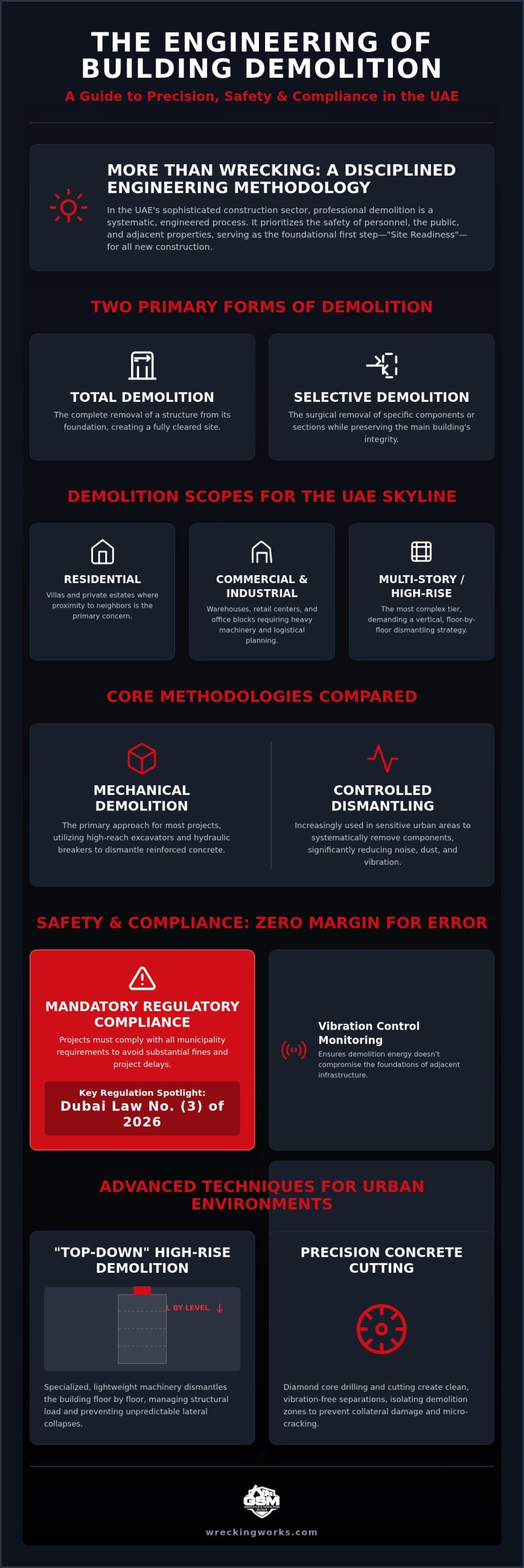
Professional Demolition is often perceived as a simple act of destruction; however, in the UAE’s sophisticated construction sector, it’s a disciplined engineering methodology. It involves the systematic dismantling of a structure to ensure the safety of personnel, the public, and adjacent properties. This process is categorized into two primary forms: total demolition, which involves the complete removal of a structure from its foundation, and selective demolition, which focuses on structural modifications or the removal of specific components while preserving the main building’s integrity.
In cities like Dubai and Abu Dhabi, the rapid pace of urban redevelopment necessitates specialized building demolition techniques. These methods allow for the removal of outdated structures within tight footprints without disrupting the surrounding ecosystem. This phase is the catalyst for “Site Readiness.” It isn’t merely the end of an old building; it’s the foundational first step of new construction, ensuring the ground is stable and clear for subsequent piling and excavation works.
The Scope of Modern Demolition Services
The diversity of the UAE’s skyline requires a versatile range of demolition capabilities. Residential projects often involve the safe removal of villas and private estates where proximity to neighbors is a primary concern. For those seeking specialized villa demolition services Dubai property owners rely on, understanding the regulatory and engineering requirements specific to residential structures is essential. Commercial and industrial demolition focuses on larger structures such as warehouses, retail centers, and office blocks, requiring specialized heavy machinery. The most complex tier is multi-story building demolition. High-rise structures demand a vertical dismantling strategy, where each floor is systematically deconstructed to manage the load distribution and prevent structural failure during the process.
Why Engineering Precision Matters in UAE Cities
Operating in high-density districts like Dubai Marina or Business Bay leaves no room for error. Engineering precision is the only way to manage structural integrity when a neighboring tower is only meters away. We utilize advanced vibration control monitoring to ensure that the energy from mechanical breakers doesn’t compromise the foundations of adjacent infrastructure. Additionally, precision tools such as core drilling and concrete cutting allow for surgical-grade removals. These methods prevent collateral damage by isolating the demolition zone from the rest of the structure, providing the stability and assurance required in modern urban environments.
Core Methodologies: Mechanical vs. Controlled Demolition
The selection of a methodology for building demolition in the UAE is dictated by the structure’s height, its material composition, and its proximity to active infrastructure. Mechanical demolition remains the primary approach for most projects, utilizing high-reach excavators and hydraulic breakers to dismantle reinforced concrete. However, there is an increasing transition toward controlled dismantling in sensitive urban environments. This method focuses on the systematic removal of components to significantly reduce noise and dust pollution, ensuring that site activities remain within the strict environmental limits set by local municipalities.
For multi-story structures, the “top-down” demolition method is the established engineering standard. This involves placing specialized, lightweight machinery on the upper floors to dismantle the building level by level. This technique effectively manages the structural load and prevents the risks associated with unpredictable lateral collapses. To maintain air quality in residential districts, we employ specialized machinery equipped with high-pressure water misting systems that suppress dust at the source of the break.
Precision Concrete Cutting and Core Drilling
Precision is a fundamental requirement in modern site preparation. Diamond core drilling allows for clean, vibration-free structural separations, which is essential when performing selective demolition or preparing a site for new utility installations. By creating these surgical cuts, engineers can isolate and remove specific concrete slabs or walls without compromising the integrity of the remaining structure. This level of control prevents micro-cracking in reinforced concrete and ensures the stability of the site. If your project requires this level of technical accuracy, you can explore specialized concrete cutting and core drilling solutions to maintain structural assurance.
High-Reach and Hydraulic Techniques
Equipment selection is based on a rigorous assessment of the building’s height and material. While traditional impact methods are still used, hydraulic crushers have become the preferred tool for high-reach excavators in the UAE. These attachments are designed to “bite” through concrete and shear through structural steel with minimal noise and vibration compared to standard hydraulic breakers. Safety during these operations is maintained through the establishment of strictly enforced exclusion zones. These areas are calculated based on the maximum reach of the equipment and the height of the building, providing a “safe pair of hands” approach to even the most complex building demolition tasks.
Safety Standards and Regulatory Compliance in the UAE
In the UAE, the regulatory framework governing building demolition is rigorous and multifaceted. Compliance isn’t optional; it’s a fundamental requirement to mitigate risks and avoid the severe penalties outlined in recent legislation. For instance, Dubai Law No. (3) of 2026 establishes strict standards for building safety and quality, with non-compliance fines ranging from AED 100 to AED 1,000,000. Repeat offenses within two years can see these fines double, reaching up to AED 2,000,000. Under Law No. 7 of 2025, which takes effect on January 8, 2026, all contractors must be registered and adhere to a unified digital regulatory regime to maintain operational legality.
A central component of any legal demolition project is the Risk Assessment and Method Statement (RAMS). This document serves as a comprehensive engineering blueprint that identifies every potential hazard on-site and details the specific mitigation strategies to be employed. It covers everything from structural stability during dismantling to the management of vibration levels. It also aligns with the Dubai Municipality “Code of Construction Safety Practice,” ensuring every action follows a systematic, approved sequence. Adhering to UAE Civil Defense codes is equally critical, particularly regarding fire safety and the secure storage of combustible materials during the deconstruction phase.
Permitting and Legal Documentation
Securing a No Objection Certificate (NOC) is the critical first step. This process requires coordination between the project consultant and the contractor to obtain approvals from various authorities, including the Dubai Development Authority (DDA) or the relevant municipality department in Abu Dhabi. Before any physical building demolition begins, utility disconnection is mandatory. We coordinate directly with providers like DEWA in Dubai or ADDC in Abu Dhabi to ensure electricity and water lines are safely capped. This prevents industrial accidents and ensures the site is ready for mechanical intervention. The contractor’s role is to verify that all permits, including those for piling and shoring, are valid and active before any excavation starts. Working with qualified demolition contractors in Dubai who understand the full NOC process and mandatory registration requirements under the 2026 regulatory framework is essential to avoiding costly compliance failures.
On-Site Safety Protocols
Physical safety on-site is maintained through high-standard hoarding and strict PPE requirements for all personnel. In busy districts like Downtown Dubai or Al Maryah Island, a detailed traffic management plan is essential to coordinate the movement of heavy machinery without disrupting public thoroughfares. We also implement real-time monitoring for noise, dust, and vibration to remain within environmental thresholds. Emergency response planning is equally vital; we establish clear protocols for structural instability or unforeseen events. This disciplined approach provides the “safe pair of hands” reliability that complex urban projects demand, ensuring that every project milestone is achieved with methodical care.
Integrated Site Preparation: The Role of Shoring and Piling
Effective building demolition in the UAE’s urban landscape isn’t an isolated event; it’s the start of a complex site preparation lifecycle. When a structure with a deep basement is dismantled, the surrounding soil loses its lateral support. Without professional intervention, this can lead to ground subsidence that threatens neighboring infrastructure. We treat the removal of underground levels as a critical engineering phase where shoring systems are installed concurrently with the demolition process to maintain site stability.
The synergy between excavation and demolition is what defines a project’s “Site Readiness.” According to Dubai Municipality regulations, shoring design approval is mandatory for any excavation exceeding 2.0 meters in depth. By proactively installing structural shoring, we provide the assurance that the plot remains secure even as the original foundation is removed. This integrated approach prevents the delays and safety risks associated with shifting soil or compromised neighboring foundations.
Shoring Solutions for Deep Excavation
The selection of shoring, such as secant piling, soldier piles, or H-beams, is dictated by the specific soil composition and groundwater levels found in the UAE. In coastal regions, secant piling is often the standard for creating a watertight barrier. As the demolition progresses, we utilize real-time monitoring to detect even the slightest ground movement. This methodical care ensures that the transition from a cleared site to a new foundation is seamless and safe. If you’re managing a project with deep underground requirements, you can secure your site’s integrity with our integrated shoring and piling works.
Piling and Foundation Support
The sandy terrain characteristic of the UAE demands deep piling to support the heavy structural loads of modern developments. Piling works involve boring or driving support columns into stable ground layers, a process that is most efficient when coordinated with the final stages of a building demolition project. A piling permit from the Dubai Development Authority remains valid for four years, which provides developers with a reliable window for project execution. This systematic execution ensures that once the debris is cleared, the ground is already engineered to support the next generation of UAE architecture.
Debris Removal and Achieving Site Readiness
The final phase of building demolition is the systematic removal of debris and the restoration of the plot to a developable state. This stage is governed by strict environmental mandates, such as Dubai Law No. 18 of 2024, which requires the diversion of waste to licensed facilities. In the UAE, construction and demolition waste accounts for over 70% of the total annual waste in several emirates. To meet sustainability targets like the UAE’s Net-Zero 2050 strategy, we implement rigorous on-site sorting. This involves separating structural steel, which makes up approximately 5% to 10% of debris, from concrete and masonry, which typically constitutes 60% to 75% of the total volume.
Achieving site readiness also involves the complete removal of underground footings and redundant utility lines that could obstruct future piling works. Once the site is cleared, final grading and leveling are performed to create a “blank canvas” for the next phase of development. This meticulous approach ensures the ground is stable and meets the precise topographical requirements of the project’s lead architect. It’s the final step in a process designed to transition a site from a liability into a high-value asset ready for new construction.
Efficient Waste Logistics
Managing waste logistics in high-traffic urban areas like Sharjah or Abu Dhabi requires disciplined coordination. We utilize specialized haulage fleets to manage a portion of the 5,000 tonnes of waste generated daily across Dubai’s active sites. Every vehicle movement is planned to minimize disruption to local traffic while ensuring a steady flow of material to recovery centers. This systematic execution prevents site congestion and maintains a safe, organized environment for the remaining earthworks or foundation preparation.
Conclusion: Selecting a “Safe Pair of Hands”
Selecting a contractor for building demolition in the UAE is a decision that impacts the safety, legality, and timeline of your entire project. An integrated partner who manages the full lifecycle, including piling, shoring, and excavation, provides a level of engineering assurance that isolated contractors can’t match. When you evaluate a partner, ensure they possess a proven track record in multi-story dismantling and a deep understanding of the 2026 regulatory landscape. This comprehensive oversight reduces the risk of structural damage to neighboring properties and avoids the confusion often associated with municipality permits.
By prioritizing technical mastery and methodical care, you protect your investment and the surrounding community. For expert guidance and a disciplined approach to your site preparation, Consult with GSM Wrecking & Demolition Works for your next project.
Securing the Future of Your Development Site
Successful site redevelopment in the UAE begins with a disciplined approach to structural dismantling. We’ve explored how a systematic building demolition strategy integrates advanced mechanical techniques with rigorous municipality compliance to protect both your investment and the surrounding urban environment. By prioritizing structural stability through integrated shoring and piling, you ensure that the transition from an old structure to a new foundation is managed with methodical care.
Choosing a partner with specialized expertise across Dubai, Abu Dhabi, and the Northern Emirates provides the stability required for high-stakes industrial work. Our full-service methodology covers everything from precision concrete cutting to final debris removal, maintaining a “safe pair of hands” throughout the project lifecycle. This technical mastery allows you to move forward with peace of mind, knowing your site is prepared to the highest engineering standards. Every project milestone is an opportunity to reinforce reliability and safety.
Ready to begin your site preparation with an authoritative industry expert? Request a Professional Demolition Consultation from GSM Wrecking & Demolition Works and ensure your project starts on a foundation of reliability and precision. We look forward to supporting your next development with engineering excellence.
Frequently Asked Questions
Do I need a permit for building demolition in Dubai or Abu Dhabi?
Yes, obtaining a No Objection Certificate (NOC) from the relevant municipality is mandatory before any work begins. In Dubai, this involves approvals from the Dubai Municipality or Dubai Development Authority. You must also coordinate utility disconnections with DEWA or ADDC to ensure the site is safe for mechanical intervention. This regulatory process ensures that the building demolition adheres to the safety standards established under Law No. 7 of 2025.
How much does building demolition cost in the UAE?
Market rates for structural removal in Dubai generally range from AED 20 to AED 60 per square foot. This variation depends on factors such as building height, the density of reinforced concrete, and the accessibility of the site for heavy machinery. While these are industry averages, a formal engineering assessment is required to determine the exact resources needed for your specific plot and the associated site preparation requirements.
How do you protect neighboring villas during a demolition project?
We protect adjacent structures through a combination of vibration monitoring and proactive shoring. Before starting, we develop a comprehensive Risk Assessment and Method Statement (RAMS) to identify potential impact zones. Using precision concrete cutting and water misting systems, we minimize the physical and environmental impact on neighboring villas. This methodical approach provides the stability required to prevent micro-cracking or structural shifts in the foundations of nearby properties.
What is the difference between mechanical and manual demolition?
Mechanical demolition utilizes high-reach excavators and hydraulic crushers for efficient, large-scale removal. Manual demolition, or controlled dismantling, involves the selective removal of components using hand tools or precision core drilling. While mechanical methods are faster for total site clearance, manual techniques are essential for selective projects or sensitive urban areas where noise and vibration must be strictly controlled to maintain local environmental compliance.
How long does it typically take to demolish a multi-story building?
The duration of a project depends entirely on the structure’s scale and complexity. A standard villa demolition typically requires one to two weeks for full clearance and debris removal. Conversely, a multi-story building can take several months because it requires a systematic, top-down dismantling approach. This steady pace ensures that structural loads are managed safely and that each floor is decommissioned without compromising the integrity of the lower levels.
Can you handle debris removal and site leveling after the demolition?
Yes, our services include comprehensive debris removal and final site grading. Once the structural dismantling is complete, we clear all concrete, steel, and underground footings to ensure the plot is ready for new construction. Our team performs final leveling to create a stable, “blank canvas” for developers. This integrated approach to site readiness eliminates the need for multiple contractors and ensures a seamless transition to the piling and excavation phase.
Is shoring always required for demolition projects with basements?
Shoring is a regulatory requirement for any excavation deeper than 2.0 meters according to Dubai Municipality safety codes. When a building with a deep basement is removed, the surrounding soil loses its lateral support. We install specialized shoring systems, such as secant or soldier piles, to prevent soil collapse and protect neighboring foundations. This engineering step is critical for maintaining site stability during the transition from building demolition to new foundation works.
What happens to the materials like steel and concrete after demolition?
Following the deconstruction phase, materials are systematically sorted for recycling and recovery. Concrete and masonry, which often make up 60% to 75% of the debris, are processed for reuse in road bases or fill. Structural steel is salvaged for recycling at licensed facilities. This process complies with UAE Federal Law No. 12 of 2018 and Dubai Law No. 18 of 2024, which mandate the diversion of construction waste from landfills to support a circular economy.